Usability Testing & UX Evaluation
Academic
UX Research
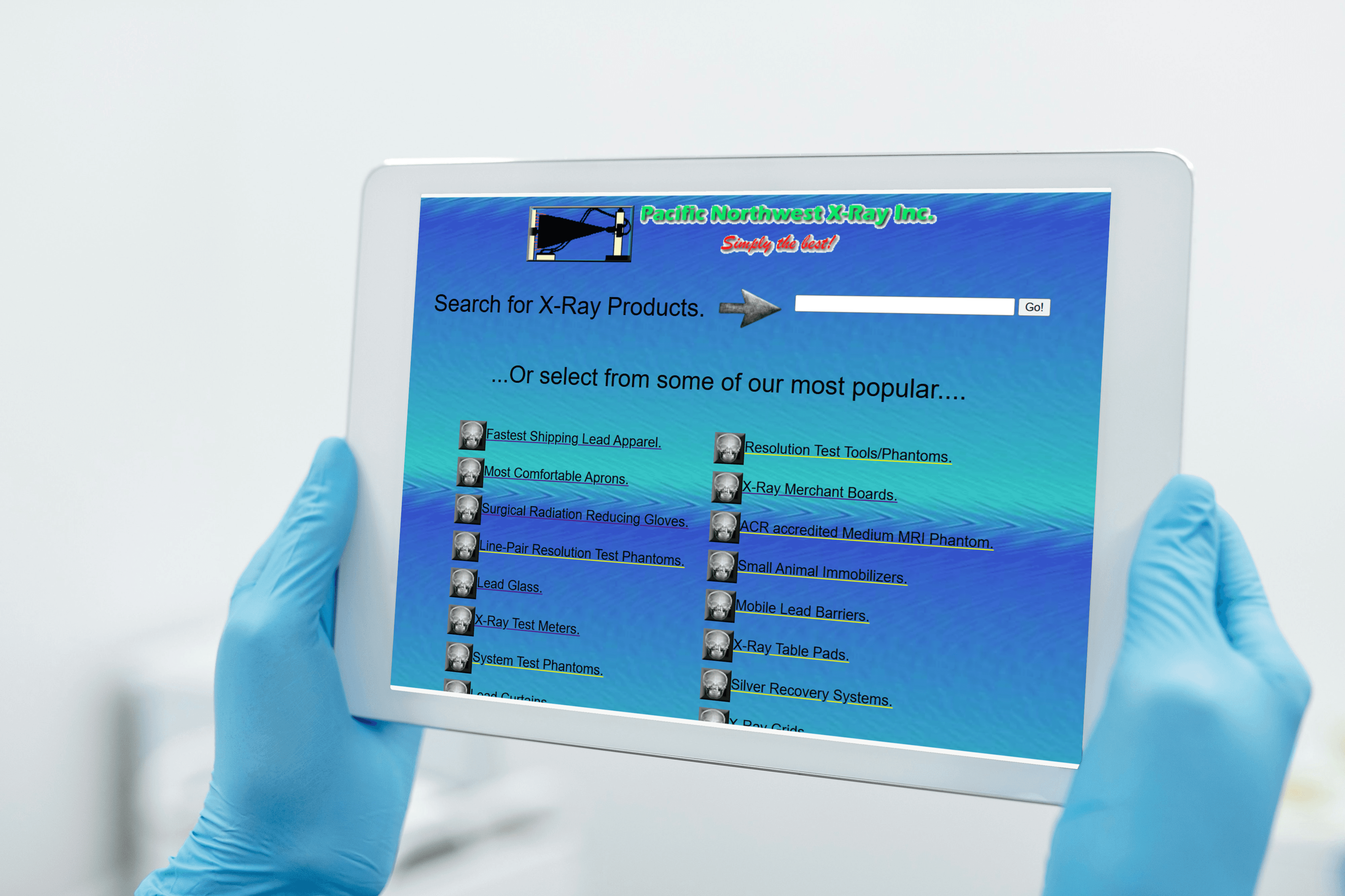
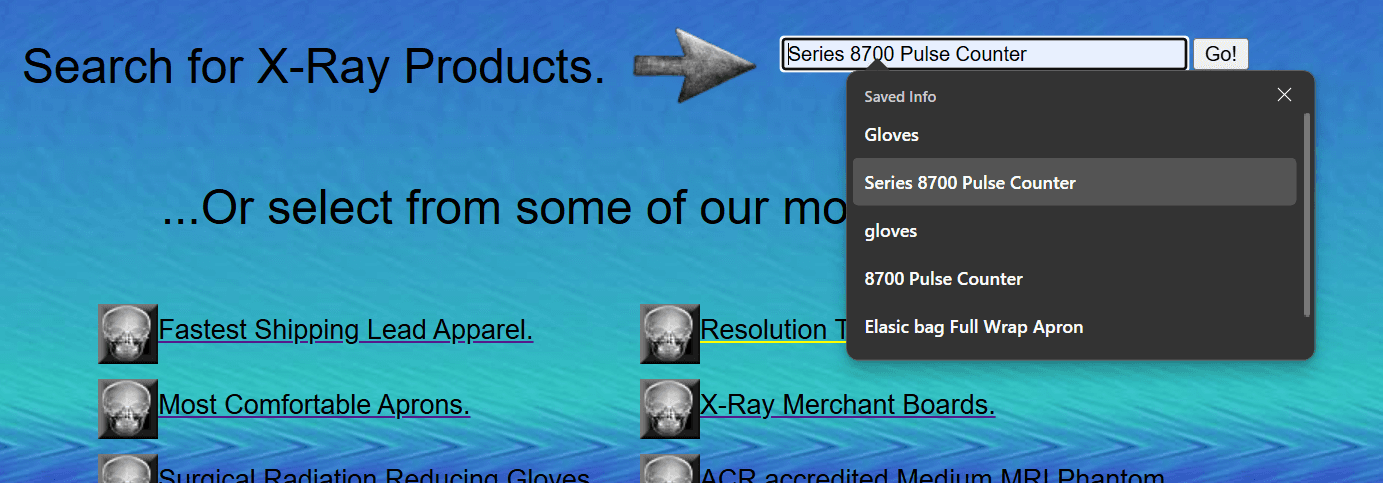
This project involved evaluating the usability of pnwx.com, an e-commerce website selling medical imaging equipment and supplies. The goal was to identify usability issues that affect task completion, efficiency, and overall user experience, and to propose actionable improvements.


The Problem
The website offers a wide range of medical products, but early observations suggested that users struggled to complete common tasks efficiently.
Key concerns included:
Difficulty navigating the site
Complexity in placing bulk orders
Lack of expected e-commerce features
An outdated and inconsistent interface
These issues were especially critical because the users relied on the platform for professional and time-sensitive purchases.
Research Goals
The usability study aimed to evaluate:
Ease of navigation for first-time users
Effectiveness of search vs. navigation
Clarity of product information
Efficiency of ordering (single and bulk)
Users & Scenarios
Two primary personas guided the testing:
Clinic Administrator
Experienced professional managing supplies and compliance for a radiology clinicHealthcare Worker in a Rural Setting
Limited technical experience, needs simple and efficient ordering
Participants were asked to complete real-world tasks such as:
Ordering a specific medical device
Placing a bulk order
Reviewing product specifications
Methodology
Conducted moderated usability testing with 5 participants
Designed task-based scenarios simulating real purchasing needs
Measured:
Task success rate
Time on task
User preferences (search vs navigation)
Supplemented findings with heuristic evaluation
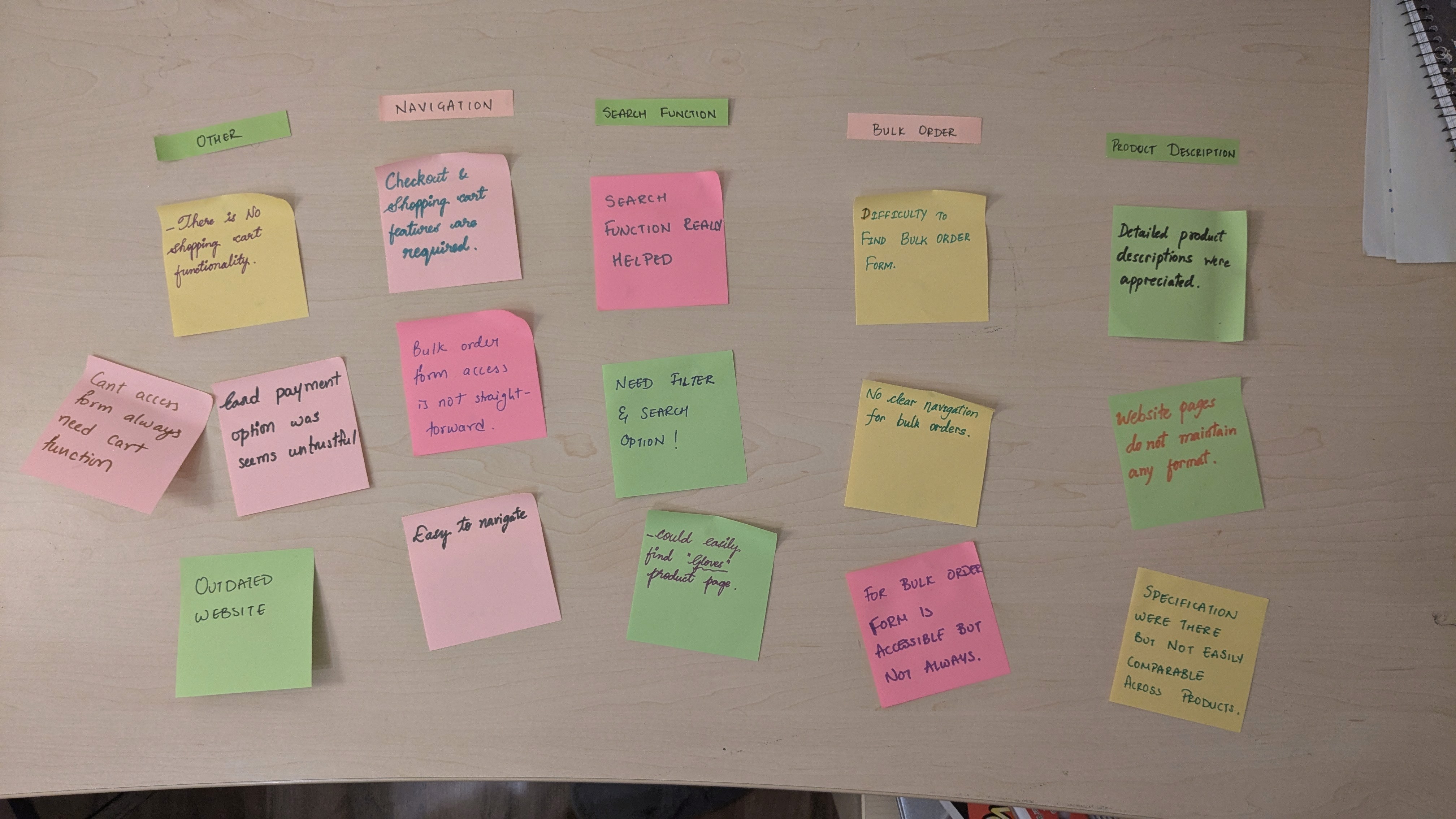
Used affinity mapping to synthesize insights
Key Findings
What worked well
Search functionality was effective and preferred by most users
Users were able to locate product pages using search
Product specifications were generally clear once found
Usability issues identified
Navigation was confusing and inconsistent
Shopping cart functionality was difficult to find
Bulk ordering flow was complex and hard to locate
Lack of filters and sorting increased effort
Overall UI felt outdated and unintuitive
Key insight:
Users strongly preferred search over navigation, indicating weak information architecture.
Impact & Insights
Task success rate:
Single order: ~60%
Bulk order: ~60%
Product information: ~80%
Users took longer than expected to complete ordering tasks
Missing standard e-commerce patterns increased cognitive load
Heuristic evaluation results aligned closely with user test findings, reinforcing the validity of the issues identified.
Recommendations
Based on the findings, we proposed:
Clear and consistent navigation structure
Visible shopping cart and standard e-commerce patterns
Simplified bulk ordering flow
Filters and sorting for product discovery
UI modernization to match user expectations
What I Learned
Usability testing reveals issues that heuristic evaluation alone may miss
Real user interaction provides deeper insight than assumptions
Testing with diverse user backgrounds improves design decisions
Repeated evaluation is essential for improving foundational UX problems